Physician total compensation is made up of three components: encounters, time and complexity-adjusted panel payments. For full details on billing in the model, please refer to the PCPCM Operations Manual.
Encounter and Time-Based Payments
- All claims must be submitted to Primary and Preventative Health Services within 90 days of the encounter.
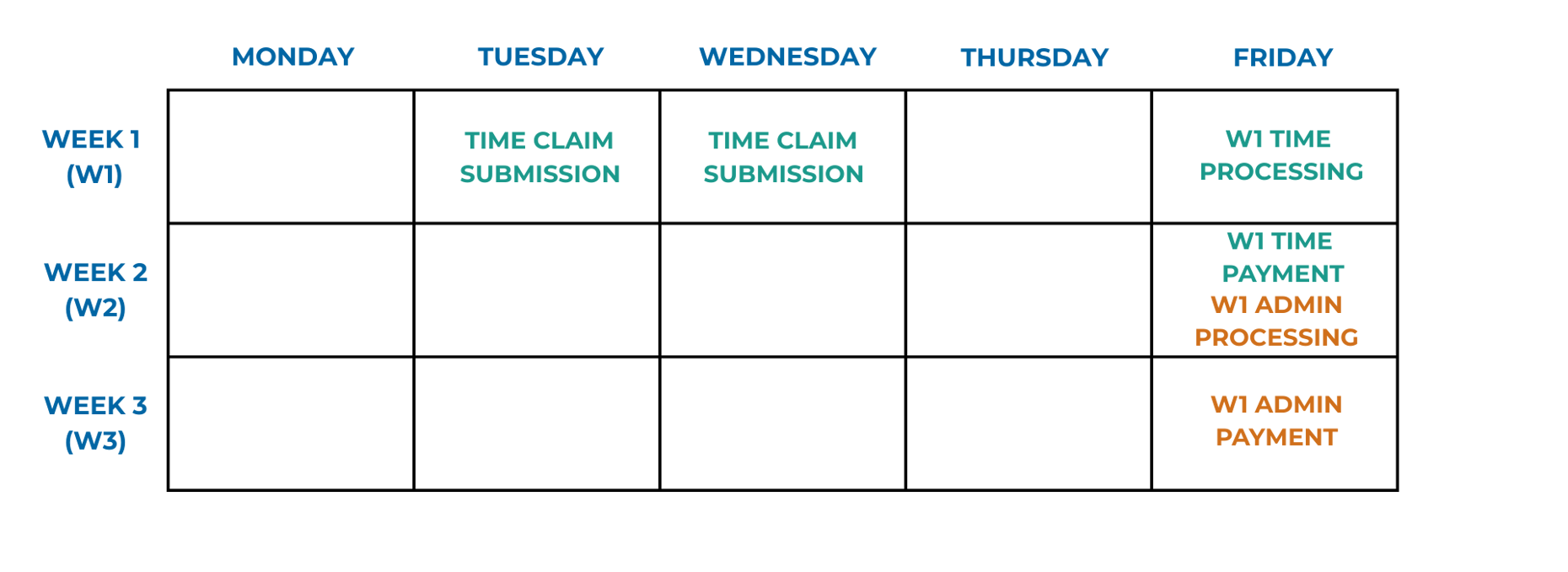
- Claims received by Primary and Preventative Health Services are processed on Tuesdays, Wednesdays, and Thursdays of each week; the weekly cut-off is Thursday at 4:30 p.m.
- When submitting within these time frames, claims are processed for payment on Friday of the following week. Claims not received within this period are processed on Tuesday and are paid on Friday of the following week
- Rejected claims must be resubmitted within 90 days of the Statement of Assessment on which the claim appeared.
- Refer to the Physician Resource Guide for details on how holidays may impact payment schedules.
Clinic Practice Management Payments (Administration)
- Physician will receive clinic practice management payments one week after the expected payment of their processed time-based claims.
- Primary and Preventative Health Services will calculate this automatically, taking 10% of the total number of hours a physician has billed and multiplying them by a rate of $105.00 per hour.
Panel Payments
- Panel is uploaded from your EMR to CPAR between the 1st and 11th of each month. Click here for the most up-to-date schedule for each EMR.
- The physician will receive panel payment for the patient on the last Friday of the following month.
- Until April 1, 2026, Conflicts may not impact panel payments, but physicians and teams should get started on Conflict management processes today.
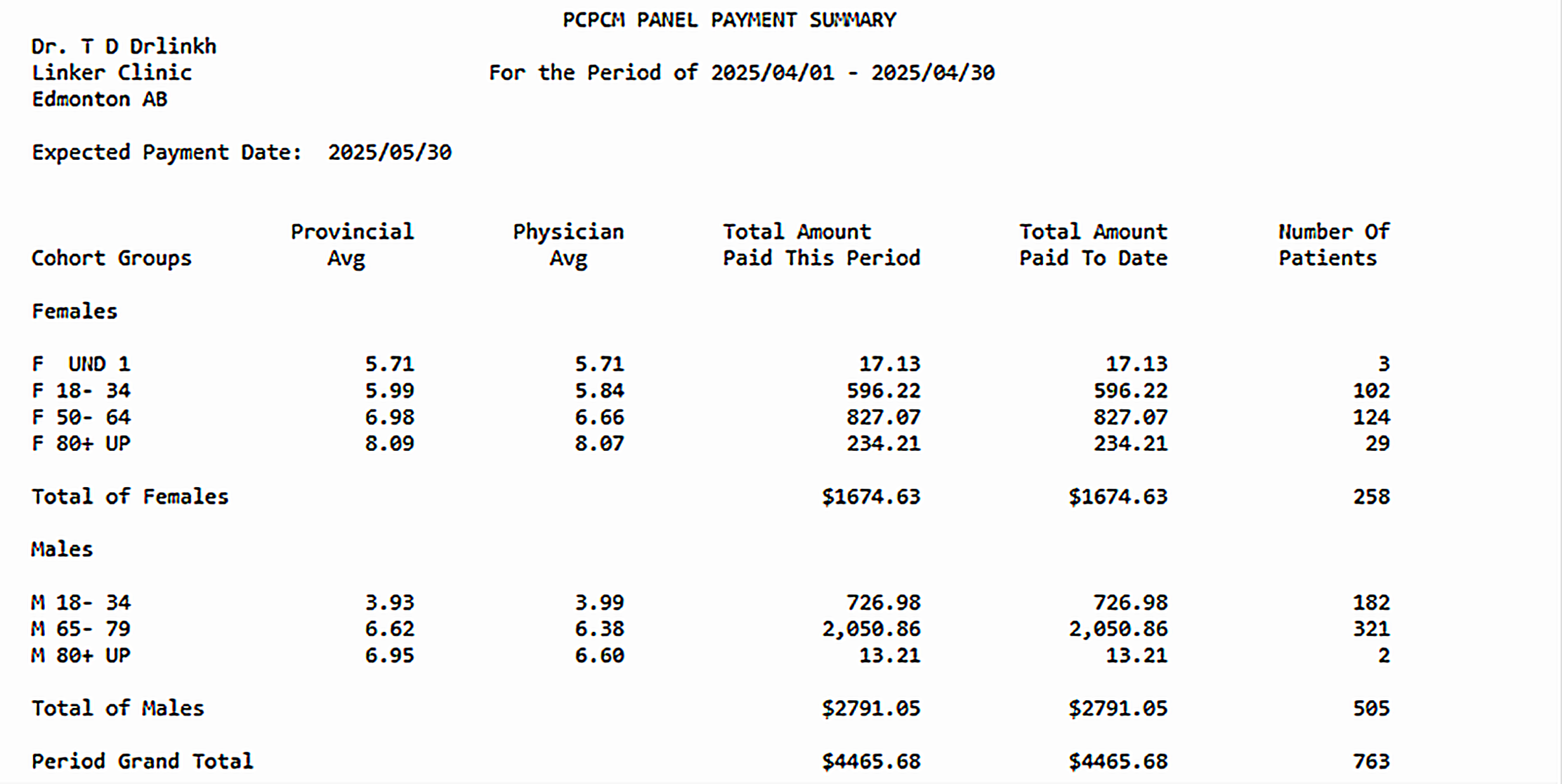
- Physicians will receive a monthly report from Primary & Preventative Health Services on their panel payment details. See example of the PC001 Report below.